
Bay Area Real Estate Update

Mortgage Rates Ease, Future Unclear
From Redfin's Chief Research Economist Chen Zhao and Rocket Mortgage.
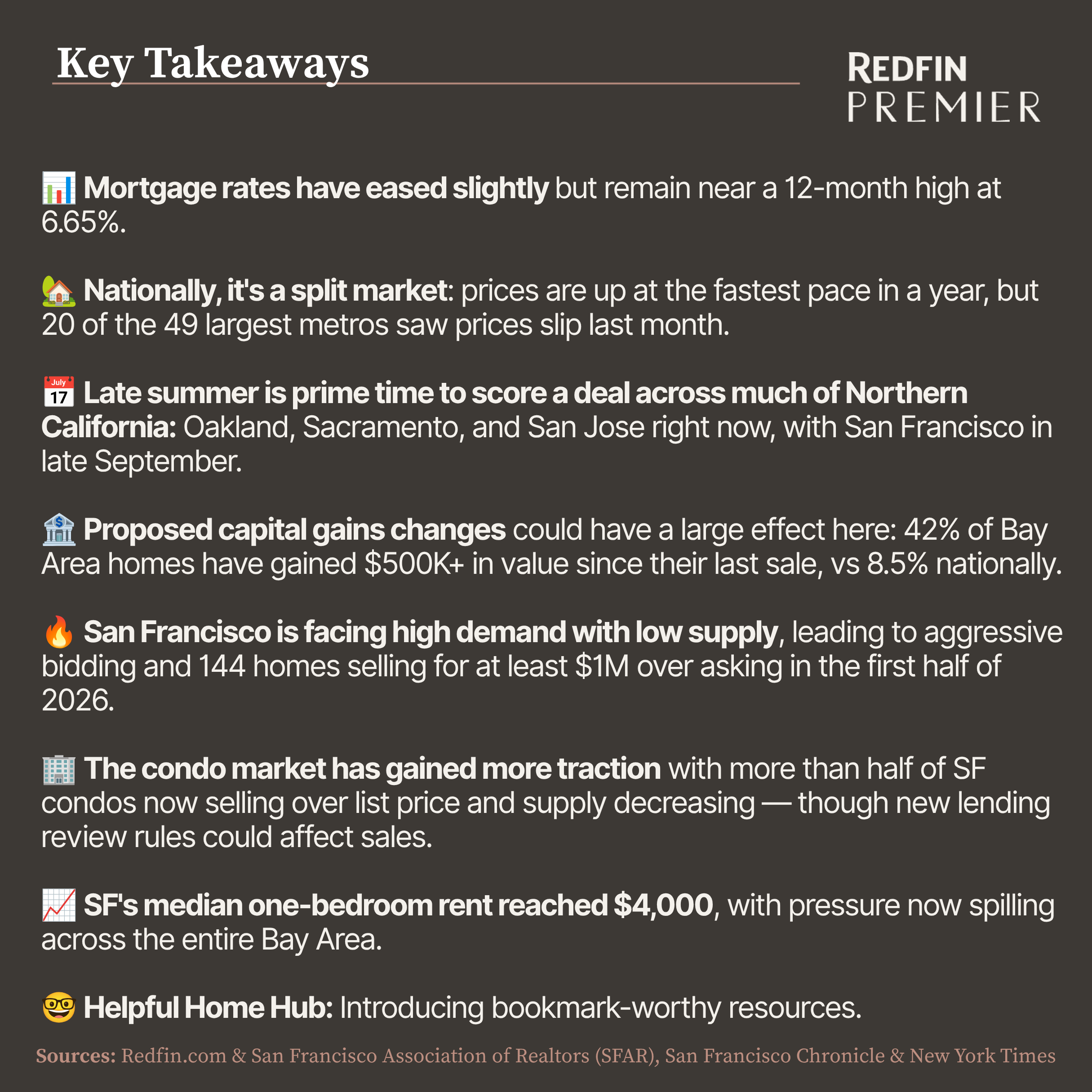
Although mortgage rates declined slightly for the past two consecutive weeks after a dramatic hike in July, they still sit near their 12-month high, with a 30-year fixed average of 6.65%. With little economic data to move things, markets are tracking trade negotiations with Iran and Canada, along with the Fed. At this morning's Jackson Hole symposium, Chair Warsh signaled that persistent inflation may require rate hikes in the coming months.What is the federal funds rate?
The federal funds rate is the interest rate banks charge each other for overnight loans. It isn’t a fixed number — it’s a target range set by the Federal Open Market Committee and moves based on key economic indicators such as inflation, job growth, and GDP. When the Fed raises this rate, banks’ borrowing costs increase and consumer rates (including mortgages) tend to follow. When the Fed cuts it, borrowing becomes cheaper and mortgage rates often ease.
How it affects mortgage rates:
- Fixed vs. Adjustable Loans: Adjustable-rate mortgages react more directly to changes in the fed funds rate. Fixed-rate loans are influenced more indirectly (via bond markets, investor demand, and more).
- Market Expectations and Timing: Mortgage markets often “price in” Fed decisions early. A future cut or hike may already be reflected in today’s rates.
- Affordability and Demand Shifts: When rates fall, buyers’ budgets stretch further, often bringing more buyers back into the market and tightening inventory.
Trying to “time the Fed” is risky: It’s wiser to focus on affordability, property goals, and locking in strong rates when it makes sense.
United States Housing Update
From the National Association of REALTORS® (NAR) and Redfin.
Home prices rose 0.27% month over month in July, essentially flat from June, even as annual growth reached 3.4% — the fastest in a year.
It's a split market: prices rose in 29 of the 49 major metros and fell in 20 (including Fort Worth, Austin, and Miami). In the places seeing the steepest annual declines (mostly Texas), there are roughly twice as many sellers as buyers, prompting sellers to price lower and giving buyers more room to negotiate. In contrast, San Francisco prices rose 1.5% for the month and 13.3% for the year, the largest gain in the country on both counts. Oakland came in second with monthly growth at 1.3%.
When is a good time to buy? The real estate market is typically very seasonal:
- Late August is the best time for homebuyers to score a deal in parts of California, Austin, TX and certain New York City suburbs.
- Mid-September is the prime dealmaking window for buyers in Baltimore, Nashville, Southern California and parts of Texas.
- Late September is the sweet spot for buyers in Houston, Las Vegas, San Francisco and Washington, D.C.
Want more details about your specific market? Click here to view different housing trends across the U.S.
A Capital Gains Change
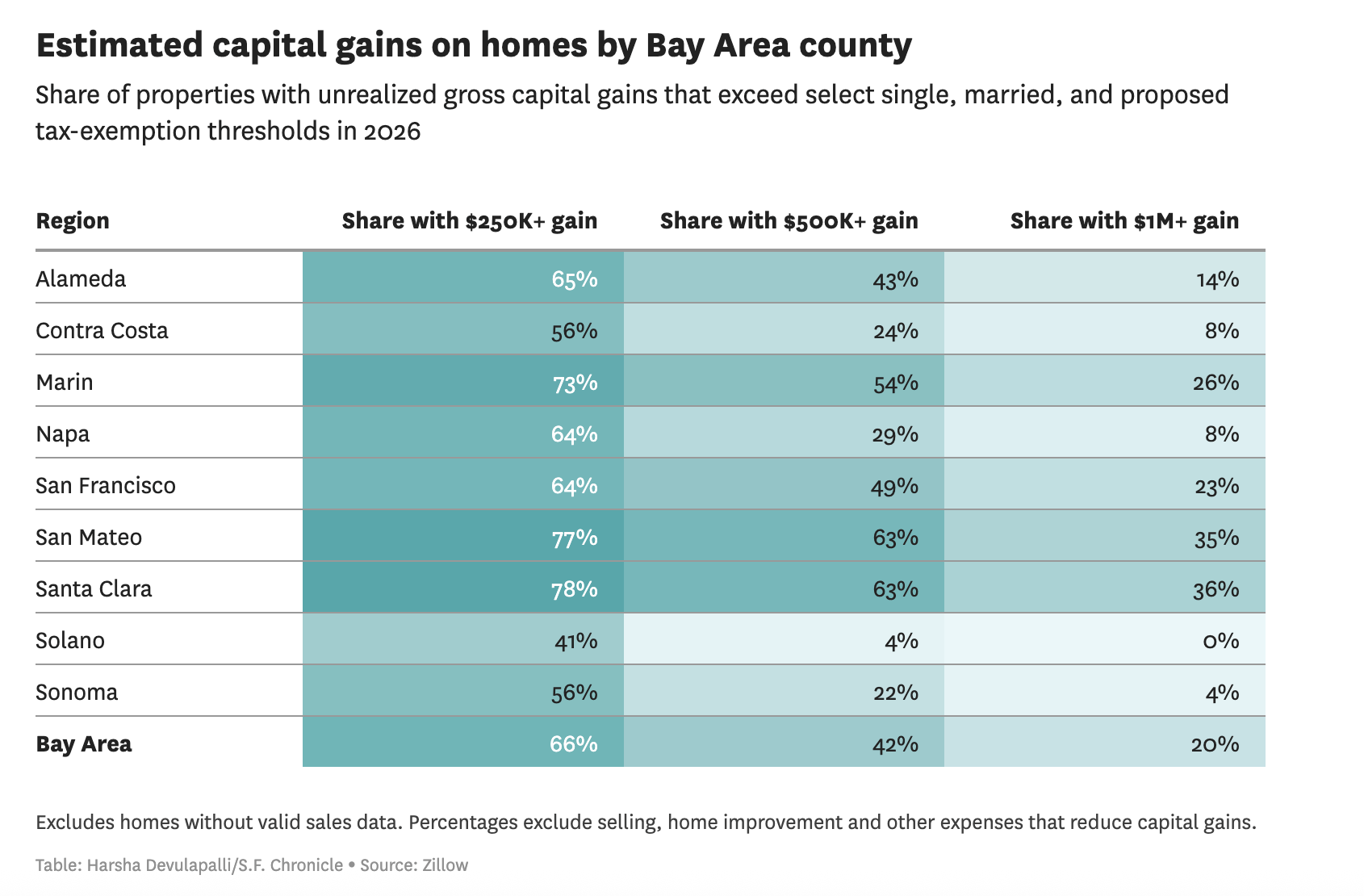
The capital gains exclusion on primary home sales — $250,000 single, $500,000 married — hasn't moved since 1997. Two bills would change that: the bipartisan More Homes on the Market Act, which would double the limits to $500,000/$1 million and index them to inflation, and the No Tax on Home Sales Act, which would remove the cap entirely.
It matters more in the Bay Area than almost anywhere:
- $250k+ in value since last sold: 66% of Bay Area homes vs 26% nationally;
- $500k+ in value since last sold: 42% of Bay Area homes vs 8.5% nationally;.
- $1M+ in value since last sold: 20% of Bay Area homes vs 2.3% nationally.
Neither bill has moved out of committee due to cost, but it's worth considering if you've owned for a while or are weighing the tax picture on a future sale.
Bay Area Update
From the San Francisco Association of REALTORS®️MLS, San Francisco Chronicle, SF Standard, Realtor.com and NBC.
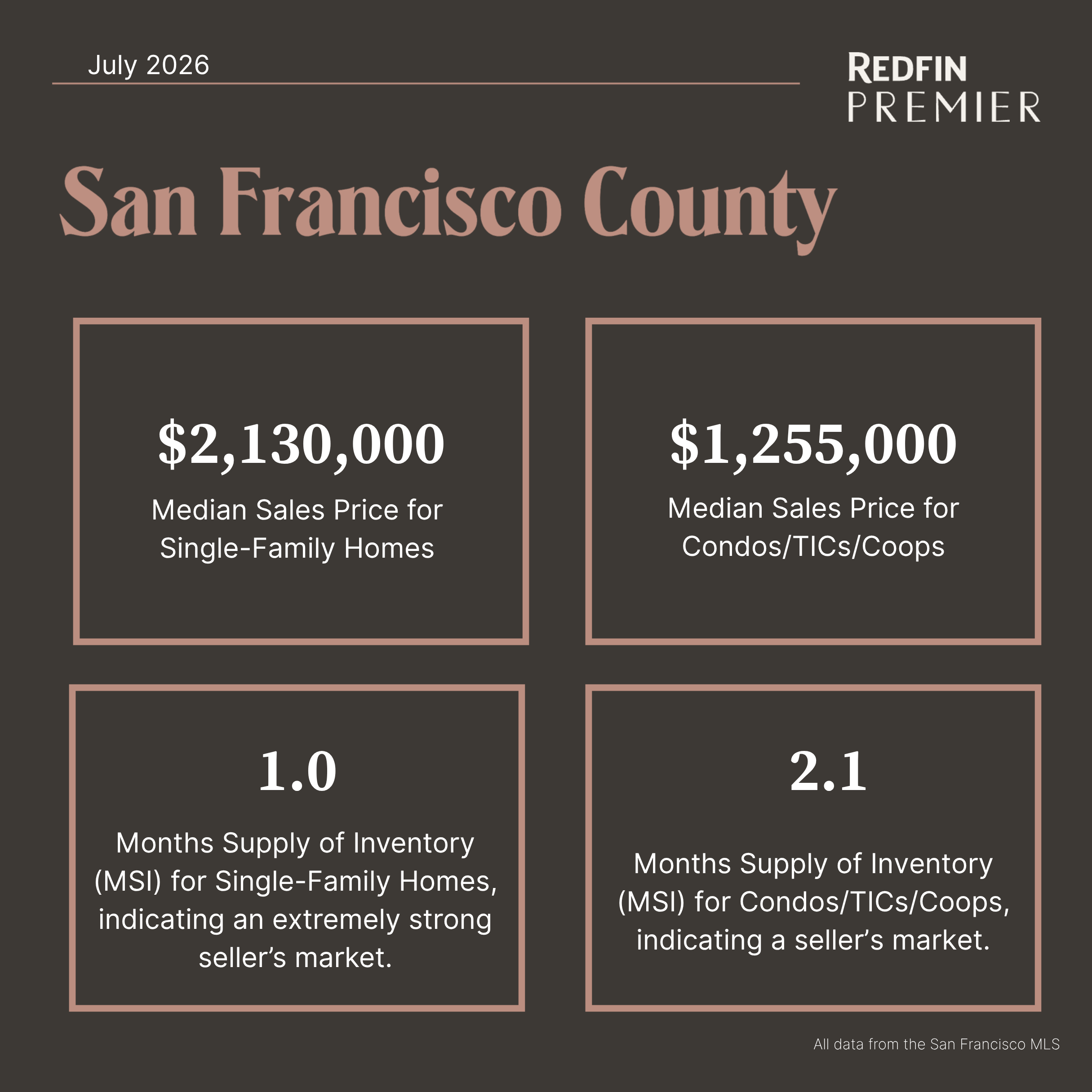
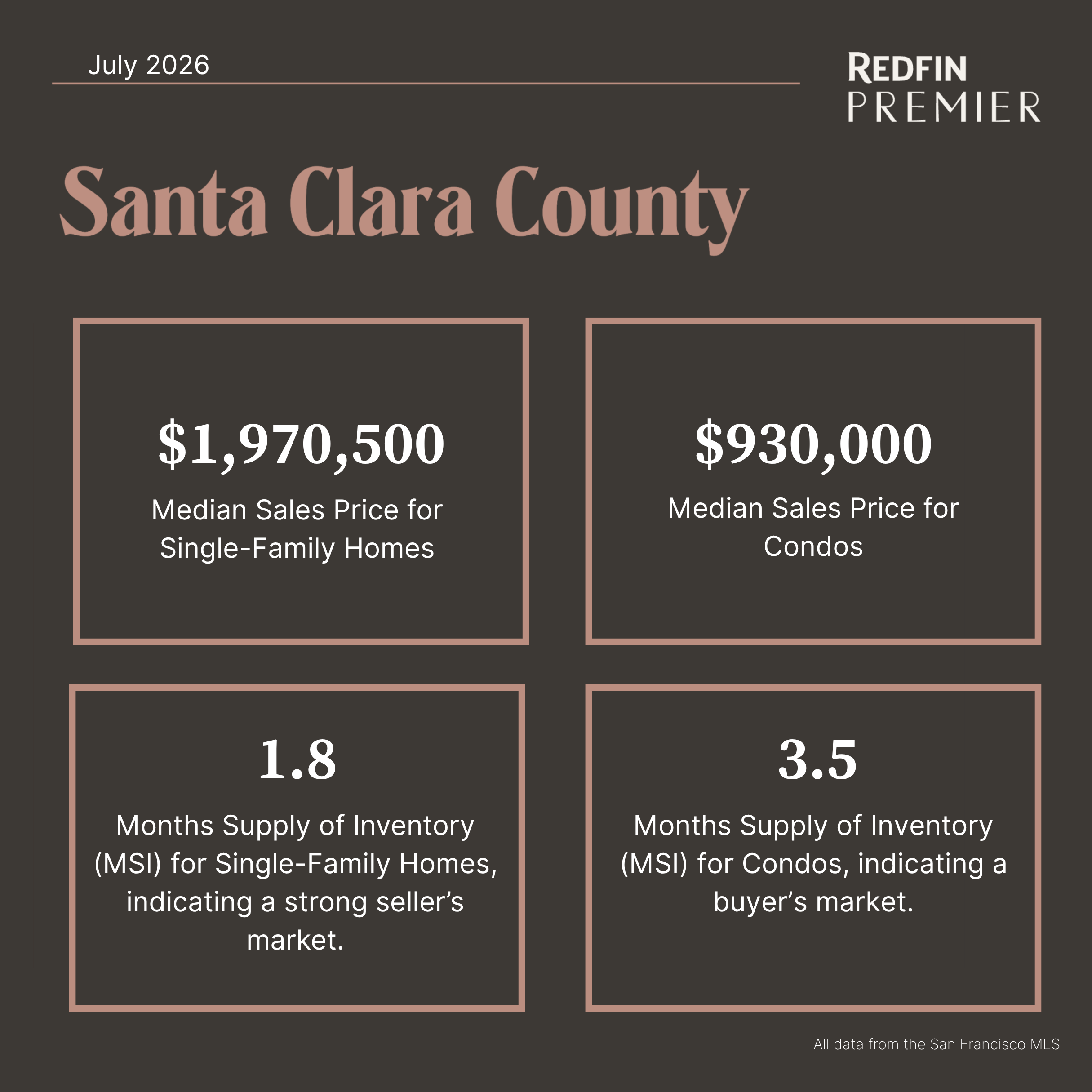
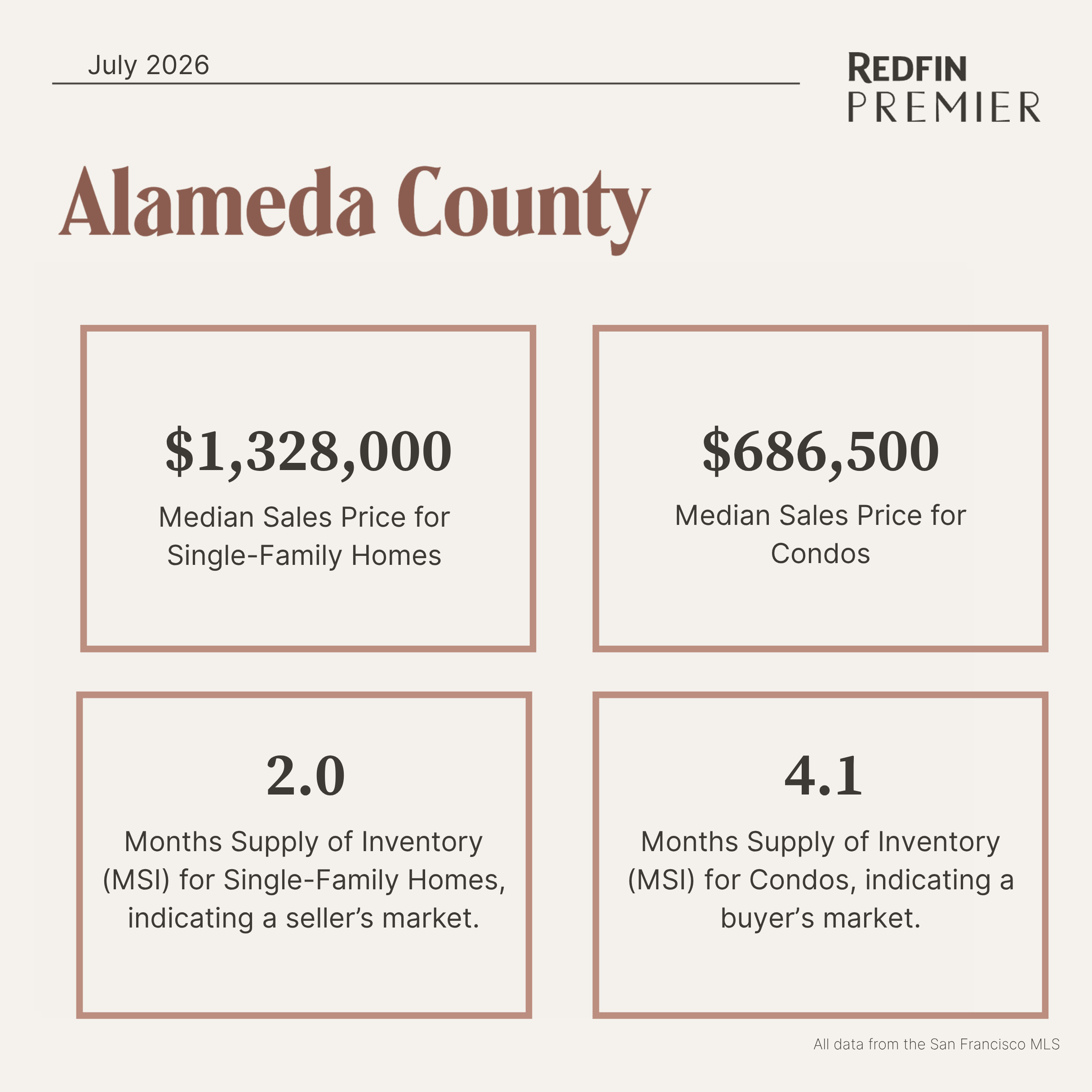
With high buyer demand and low supply, San Francisco is setting its own trend: 144 SF homes sold at least $1 million over asking in the first half of 2026 (44 in June!). Buyers are bidding aggressively and roughly 30% of Bay Area sales this spring were all-cash. Active listings are down 42.3% for single-family homes and 43.4% for condos year over year, and year-to-date new listings are down 4.9%. Houses are now selling in 22 days at 126.2% of list price, with 85.9% closing above asking.
Condos, TICs, and co-ops are feeling it too: properties selling over asking nearly doubled year over year, 28.5% to 53.2%. Pending sales rose 23.3%, closed sales 27.6%. Months of supply fell from 3.6 to 1.6, and average time on market from 62 days to 44. Worth noting: new condo lending rules that took effect August 3 may affect future sales due to delays or denials.
Rents hit a new high, too: SF's median one-bedroom rent topped $4,000, with neighborhoods like SoMa and Alamo Square up more than 40% year over year, and that pressure is spilling across the entire Bay Area. The upside: developers are starting to build again after a six-year freeze, backed by JPMorgan's recent $200 million bet on SF housing.
Curious how these trends impact your home or future plans? Whether you're thinking about selling, exploring opportunities, or staying informed, I’m here as a resource. Feel free to reach out anytime at 650.823.5217 or Sam.Young@redfin.com for a personalized market update and guidance.
If you're currently working with another brokerage, this is not intended as a solicitation of your business.
Categories
Recent Posts